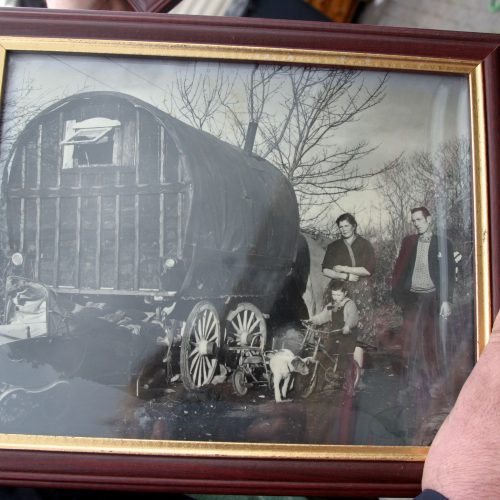
Culture, homes and jobs
Gypsies and Travellers have been part of the capital’s culture for centuries. The ancestors of today’s Gypsies and Travellers in London gathered at traditional stopping places in the city. But the rapid expansion of London after World War Two meant many stopping places were replaced by housing and Gypsies and Travellers were effectively “planned out”.
Although many Gypsies and Travellers try to maintain their nomadic way of life, lack of pitches on local authority sites and eviction powers make it difficult for many to go on the road today. Most families in London have been forced to live in housing. Some still live on roadside encampments or choose to travel in the summer months.
The community faces a huge housing crisis in London, with many families facing constant evictions.
Romany Gypsies and Irish Travellers are recognised as ethnic groups under the Race Relations Act 1976, and they are protected by the Equality Act 2010. But prejudice, discrimination and isolation affect their access to services, jobs and accommodation.
Travelling does not define us. Being a Traveller is not just about travelling – it is also about our beliefs.
Challenges faced by Gypsies and Travellers
Gypsy, Roma and Traveller (GRT) communities experience systemic discrimination.
Many families live in insecure, unsuitable and overcrowded conditions due to the extreme shortage of caravan sites and suitable accommodation. The government has recently criminalised trespass and increased police powers to evict roadside camps, which will only make the situation worse.
Official statistics show that:
- 57% of people who identify as Gypsy and Irish Traveller have no formal qualifications
- Youth employment among Gypsies and Travellers is the highest of any ethnic group
- Gypsy, Roma and Traveller pupils have the lowest attainment of all ethnic groups
Research by Gypsy and Traveller organisations has found that:
- 40% of young Travellers have experienced bullying in school
- 61% of young Travellers left school straight after primary school or during secondary school
The impact of low educational attainment on the life chances of GRT young people means they are more likely to end up in the Criminal Justice System.